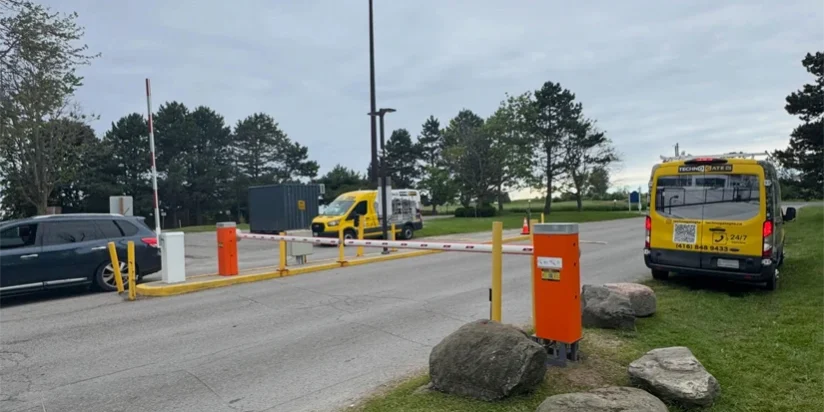
If you manage a parking lot, gated community, or industrial site anywhere in the Greater Toronto Area, chances are you’ve seen a barrier gate in action. That long horizontal arm that rises and falls to control vehicle access is one of the most practical security tools available to property owners today. This guide breaks down how barrier gates work, where they make the most sense, and what to consider before installing one.
What Is a Barrier Gate?
A barrier gate, sometimes called an arm gate or boom gate, uses a motorized horizontal arm that pivots upward to allow vehicles through and lowers back down to block access. Unlike swing or sliding gates, barrier gates don’t require a full panel to move across an opening, which makes them faster to operate and easier to fit into tight spaces.
They’re commonly paired with access control devices such as card readers, keypads, or remote transmitters, allowing property managers to control exactly who comes and goes.
Where Barrier Gates Work Best
Barrier gates are built for high-traffic, high-turnover environments where speed and control matter more than a fully enclosed perimeter. Common applications include:
- Parking garages and surface lots
- Gated residential communities and condo complexes
- Industrial yards and loading areas
- Toll booths and ticketed entry points
- Construction sites needing temporary vehicle control
Because the arm lifts rather than sliding or swinging, barrier gates can process vehicles quickly, which is a major advantage in locations with steady traffic flow.
Key Benefits of Barrier Gates
Property owners choose barrier gates for a few practical reasons:
- Speed – Arms raise and lower faster than most swing or sliding gates, reducing wait times during peak hours.
- Space efficiency – No need for a full swing radius or side track, so barrier gates suit properties with limited room.
- Cost-effectiveness – Compared to full perimeter gates, barrier arms are typically less expensive to install and maintain.
- Flexible access control – Barrier gates pair easily with intercoms, card readers, and license plate recognition systems for tailored access management.
Features to Look For
Not all barrier gates are built the same. When comparing options, pay attention to:
- Arm length and material – aluminum arms are lightweight and rust-resistant, ideal for our climate.
- Cycle speed – how quickly the arm opens and closes affects traffic flow.
- Battery backup – ensures the gate still operates during a power outage.
- Obstruction sensors – required for safe operation around vehicles and pedestrians.
- Weatherproofing – GTA winters demand equipment rated for cold, snow, and salt exposure.
If your property already has a tilt gate or is considering one, it’s worth comparing both styles side by side. Our Tilt Gate & Barrier services page outlines the differences and helps you decide which option fits your site.
Installation Considerations
Before installing a barrier gate, a few site-specific factors need to be assessed: traffic volume, power access, ground conditions, and how the gate will integrate with existing access control. Getting this planning stage right avoids costly rework later.
We cover many of these planning steps in more detail in our article on essential factors to consider before installing an automatic gate in the GTA, which applies to barrier gates as much as swing or sliding systems.
For properties that also need intercom or remote access functionality, pairing your barrier gate with our intercom system services creates a more seamless entry experience for residents, tenants, or staff.
Maintenance Keeps Barrier Gates Reliable
Barrier gates operate under constant mechanical stress, especially in high-traffic locations, so routine maintenance matters. A well-maintained arm gate should be inspected for:
- Loose or worn arm mounting hardware
- Motor and gearbox lubrication
- Sensor alignment and responsiveness
- Battery backup performance
Seasonal changes in the GTA can be tough on outdoor equipment. Our seasonal gate maintenance guide walks through a spring and fall checklist that applies directly to barrier gate systems.
If your gate starts hesitating, making unusual noises, or responding slowly to commands, don’t wait. Our article on signs your automatic gate needs professional repair explains which warning signs should prompt a service call.
Safety and Standards
Because barrier gates operate around moving vehicles and pedestrians, safety compliance isn’t optional. Canadian installations should follow recognized safety standards for automated gate and barrier equipment, including guidance published by the Canadian Standards Association, which sets benchmarks for mechanical safety and entrapment protection on powered gate systems.
Working with an experienced installer ensures your barrier gate meets these standards from day one, rather than requiring costly retrofits later.
Why Choose Techno Gate GTA
With 20+ years of experience serving Markham, Toronto, and the wider GTA, Techno Gate GTA installs and services barrier gates for both residential and commercial properties. We handle everything from initial site assessment to ongoing maintenance, so your gate keeps performing reliably through every season.
Ready to add a barrier gate to your property, or need service on an existing one? Call us at (905) 205-2550 or visit us at 3400 14th Ave #11, Markham, ON L3R 0H7. You can also request a free estimate through our get a quote page.
Meta Title:
Meta Description:
Suggested URL Slug: /blog//